
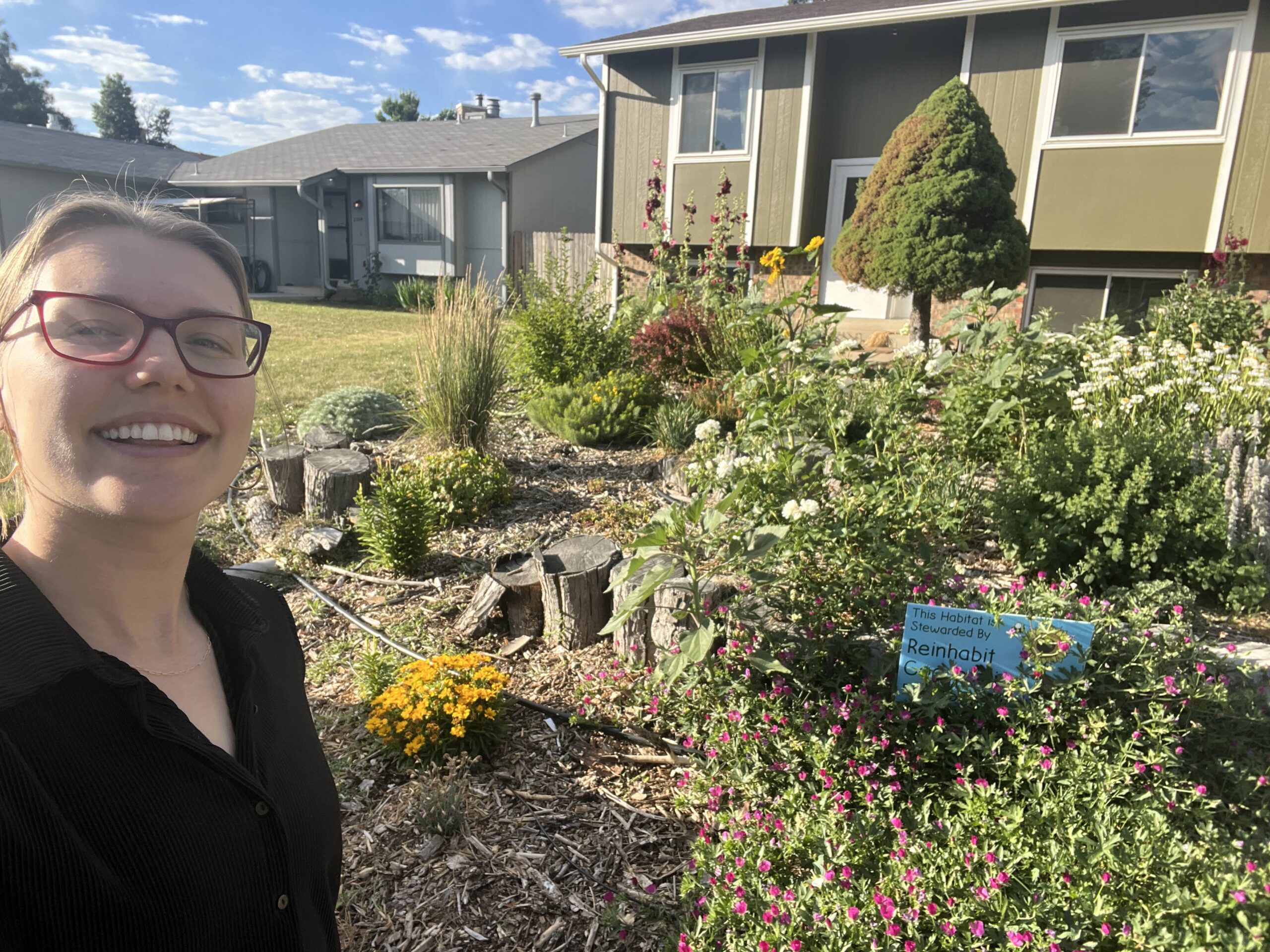
We got a lawn.
My husband and I bought our home in spring 2021. We thought a lot about location, square footage, repairs, loans, insurance, furniture, and budget. After two intense weekends, some wheeling and dealing, and a month of rent-back, we moved in.
As we were settling in, one thing we didn’t think about was lawn care. Sure, we knew how to cut grass, but neither of us had ever been fully responsible for a lawn before and neither of us really wanted to make a hobby out of it. As cost-conscious and environmentally-conscious people, we thought it would be a waste to regularly water our lawn just to keep it lush and vibrant green (in dry Colorado no less). So we decided not to water our lawn.


We needed help.
And wouldn’t you know, without water or attention our lawn looked pretty bad near the end of fall. At this point, we decided we couldn’t ignore it, but we didn’t know exactly what to do with it.
I considered hiring someone like The Lawn Doctor to just come by and “fix” this “problem” and take care of it from now until eternity. Though convenient and guaranteed to look good, that option was unappealing for two reasons:
- I didn’t want to use poison and synthetic fertilizers for environmental and health reasons
- It would be an unfulfilling expense
You know those boring operational expenses like your water heater, gas, insurance, and taxes? At least I can justify those expenses: I love a warm shower, cooking food on my stovetop, being covered in case of emergency, and fulfilling one’s civic duty. With a lawn it’s… a monthly payment for a more socially acceptable green patch of grass to look at?
I remember reaching out to landscaping companies for a more natural route, and they said their projects were a minimum of $6,000 and that we could start next year in the spring 🙃
I didn’t know what to do.
So while doing research on alternative options, I came across Living Systems Institute, a non-profit in my neck of the woods that advocated for organic, sustainable gardening. AND it turned out that they had a gardener service. I thought that maybe they could help me with a low effort lawn alternative. I sent an email asking for help and eventually got paired with Zanna.
About a week later she walked around my barren property with me and asked what my vision was. I really didn’t have one: I simply didn’t want a useless brown yard and didn’t want to poison, fertilize, or excessively water. She suggested a garden bed of perennials in my front yard. We settled on a 24 x 24 foot section, almost 600 square feet. And with that, we had a plan.

Time to scavenge.
Now Zanna is but one person, not a full blown landscaping service. And as a non-profit, Living Systems Institute has a mission greater than beautifying your yard: they want to grow community, habitat, your knowledge, and your connection with the earth. So Zanna came as both a helping hand AND a source of knowledge so that I could eventually understand and take ownership of my land. Accordingly, Zanna outlined the steps to get to the goal, and we worked together to get there.
First was the ultimate quest to find cardboard, thick logs, thinner twigs, woodchips, and literal tons of manure. I hit up NextDoor, Craigslist, coworkers, neighbors, and the streets on garbage day. I was a VULTURE. Our land went from a dead brown yard, to a junk yard, to a proper garden bed by the end of the year. By early spring 2022, Zanna had installed our drip irrigation system. We now had the perfect blank canvas to fill.


Time to learn and grow.
What comes next is a little less linear and supported and a little more iterative and independent. The garden became a kind of sticker sheet to slowly collect perennials: ones neighbors were giving away, ones I had bought because I’d seen them while climbing in the Colorado front range, or ones that simply started growing that I allowed to mature.
In the beginning the garden was a little sparse, but as time flew over the past four years, it has leapt and changed. There was growth and death. There were periods of devotion and of neglect. There were moments of frustration and of teary-eyed joy. In the end, I have learned so much about my patch of earth, this little ecosystem, and myself. I am proud and grateful to have transformed something useless into something useful: rich soil that provides a home for bugs and beautiful plants which in turn bring joy to local pollinators and neighbors alike.


Want support along your journey?
- Sign up for a garden consultation with LSI’s garden service, Reinhabit Co-op
- Learn more about deep mulch gardening
- Learn more about Living Systems Institute (LSI)
- Join us at a free, in-person event in Golden via our Meetup
- Donate to support our mission
About Emma Ropski

In 2021, Emma (she/her) transformed almost 600 sq ft of her front lawn into a garden bed with the support of Living Systems Institute (LSI) gardeners as a Reinhabit customer. She feels blessed to have reconnected to the living systems around her through stewarding her land, composting, familiarizing herself with local flora, and continuing to learn through workshops at LSI.
In 2025 she joined LSI’s board as co-executive director. She supports our mission through her skills and experiences from her day job as an IT project manager and business team coach.